About 50 minutes
Dictionary of the Chinook Jargon, or Indian Trade Language, of the North Pacific Coast — A Closer Reading
Language Study
11,324 recorded words. 1 minutes difference from this book's estimate.
View Gutenberg source #35492
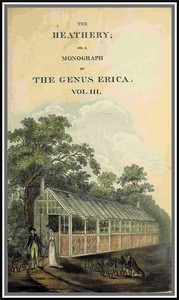
The catalog record for The heathery; or, A monograph of the genus Erica. vol. 3 — Context and Discussion provides practical reading context through 11,069 words, 49 min estimated reading time, and 3 detected text sections.
The text analysis averages about 10.0 words per sentence, while the detected sections provide another way to judge how the source is divided.
Project Gutenberg metadata also associates the work with “Ericas,” connecting these edition facts with the source record’s subject description.
Explore this collection
These alternatives are selected using recorded categories and estimated reading time.
About 50 minutes
Language Study
11,324 recorded words. 1 minutes difference from this book's estimate.
View Gutenberg source #35492About 47 minutes
Language Study
10,770 recorded words. 2 minutes difference from this book's estimate.
View Gutenberg source #58249About 51 minutes
Language Study
11,683 recorded words. 2 minutes difference from this book's estimate.
View Gutenberg source #58477Search stored excerpts and compare books → Choose by your preferences →
Choices use stored catalog measurements. Estimates vary with reading speed. A shared category is a catalog label, not a claim that two books have the same argument or literary quality.
Search reads excerpt text stored with this catalog and links to its associated Gutenberg record. The connection is stored in the site database; this tool does not recheck that every excerpt is word-for-word identical to that external record. Excerpt search does not cover every chapter and does not verify historical publication dates.
Catalog snapshot checked: 2026-09-26. Coverage: 93 public books, 93 available source excerpts.
Calculated from edition completeness, EPUB availability, text structure and catalogue metadata. Not a user rating.
Total of 100 points, scaled to a 2.5-5.0 range. Editions with an empty description or a missing EPUB file are not scored.
Public-domain source text
The source text is kept in the dedicated reader, separate from this catalogue record and its commentary.
H. C. Andrews's third volume of The Heathery continues a systematic catalog of the genus Erica, pairing Latin descriptions with English translations and engraved plates. The work opens with a dissertation that estimates the family at about three hundred species and varieties, positioning the Cape of Good Hope as the "emporium for this unrivalled tribe of plants." Andrews notes that the genus may be "half delineated" by this volume's end, with the sixth volume expected to contain all known species.
Each entry follows a consistent structure: a Latin description, an English translation, a reference list of magnified dissections, and notes on native habitat and blooming period. The text moves between technical botanical language—"antheræ muticæ, inclusæ," "corolla sub-cylindrica"—and practical cultivation advice, such as the difficulty of preserving ericas in low-lying areas due to fog.
Each species description in this volume adheres to a rigid format. The Latin Descriptio opens with the characteristics of the anthers (e.g., "muticæ, inclusæ" for Erica acuminata), followed by the arrangement of flowers, shape and color of the corolla, leaf morphology, and stem habit. The English translation mirrors this sequence precisely, often using the same phrasing: "Tips beardless, within the blossom" or "Blossom bell-shaped, and purple."
After the description, a Reference section lists numbered magnified views—such as "1. A leaf shown from the under side, magnified"—that correspond to the engraved plate. This pairing of text and image is central to the monograph's function as a visual and verbal record. The entries conclude with the plant's native location (almost always "Cape of Good Hope") and blooming months, creating a predictable rhythm across species.
Certain descriptive terms recur across entries, building a consistent visual vocabulary. Leaves are frequently described as "three-sided" (trigona), "rolled back" (retorta), or "furrowed beneath" (subtus sulcata). The corolla is often "narrowed at the mouth" (ore arctata), and the stem is "shrubby" (fruticosus) with "thread-shaped" (filiformes) branches.
Colors are specified with precision: "purple" for Erica acuminata, "crystalline white" for Erica obbata, and "scarlet" for Erica Patersonia. The size of blossoms is given in familiar units—"an inch long" or "of the size of a pea"—while the overall plant height ranges from one to two feet. These repeated details create a systematic framework for comparing species.
The volume's structure guides the reader from written description to engraved illustration and back. Each entry's Reference list functions as a legend for the plate, directing attention to specific magnified details: the empalement, chives, pointal, and seed-bud. For example, Erica acuminata includes "1. A leaf shown from the under side, magnified" and "3. Chives and pointal, one tip magnified."
This movement between text and image is essential to the monograph's purpose. The Latin and English descriptions provide a verbal taxonomy, while the references anchor that taxonomy in visual evidence. The reader is expected to move back and forth, using the numbered keys to locate the structures described. The plates themselves are not reproduced in the text, but the references imply their presence as the primary record of each species.
Every species in this volume is listed as "Native of the Cape of Good Hope," underscoring the region's role as the primary source for the genus. The introductory dissertation describes the Cape as "the emporium for this unrivalled tribe of plants," suggesting that the volume's scope is geographically focused. Andrews expresses doubt that new species will be found elsewhere, unless "some unexpected mine of novelty" is discovered.
The blooming periods vary—from February to June for Erica patens to July to October for Erica acuminata—but the native habitat remains constant. This repeated detail reinforces the monograph's reliance on a single geographic origin, while the cultivation advice in the dissertation addresses the challenges of growing these plants in European gardens, particularly the threat of fog in low-lying areas.
This volume offers a structured approach to identifying and comparing heath species through consistent terminology and visual references. Readers may find it useful to move between the Latin and English descriptions, noting how the same botanical features are described in both languages. The references to magnified dissections invite close attention to the plates, which are the core of the monograph's documentary value.
Some evenings I think of The Heathery, its patient Latin names and engravings, each heath a small testimony to naming things properly. Odd, then, how often that same quiet care surfaces in English Surnames: Their Sources and Significations — A Reader’s Guide—another book that dwells on roots, on the slow soil of language, asking only that we look closely enough to remember.
Build a private reading journal entry for this title.